

Quick answer
October is one of the strongest months for whale watching in Boston, with humpback and finback whales concentrated along Stellwagen Bank as they feed intensively before migration. Success rates remain high through mid-month, though Atlantic weather systems bring more variable sea conditions than summer. Morning departures between 09:00 and 12:00 generally encounter calmer water and better visibility, with cruises departing from Long Wharf daily.
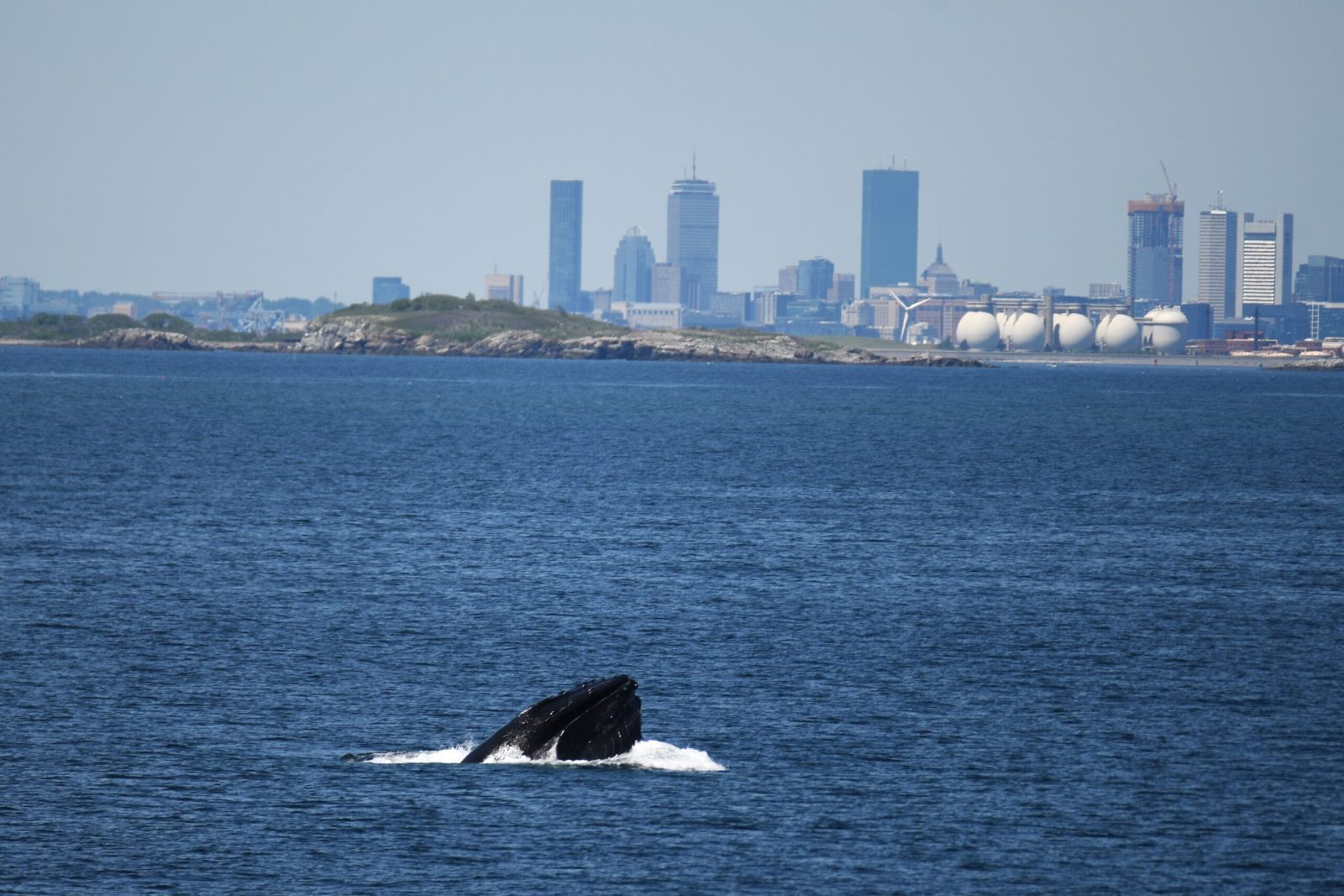
Humpback whales consume up to 3,000 pounds of fish daily during their pre-migration feeding phase, and Stellwagen Bank becomes a concentrated feeding ground as baitfish schools cluster in cooling autumn waters. October whale watching in Boston benefits from this biological urgency—whales spend extended periods at the surface, lunging through schools of sand lance and herring in patterns that make sightings both frequent and dramatic. The shift from summer to fall conditions reshapes the experience on the water. Sea temperatures drop from September's mid-60s Fahrenheit to the low 50s by month's end, which stabilizes baitfish distribution but also signals the onset of more unpredictable Atlantic weather. Wind patterns become less consistent, and passing fronts can generate swells that were rare in July and August. Morning departures offer the statistical advantage—offshore winds are lightest before noon, and the angle of autumn sunlight improves surface visibility for spotting blows and breaches. Tours operate daily from 1 Long Wharf with departures running from 09:00 through afternoon slots, though the earlier window reduces the likelihood of choppy return conditions. Finback whales, the second-largest species on earth, appear alongside humpbacks throughout October but exhibit different surface behavior. Where humpbacks breach and slap pectoral fins, finbacks tend toward sustained shallow dives and rapid directional travel. Spotting a finback often means tracking a sleek dorsal fin cutting through swells at speeds approaching 25 knots. Both species rely on the same prey base, and multi-species sightings become common when baitfish concentrations are dense. Minke whales and Atlantic white-sided dolphins round out the likelihood roster, with the occasional right whale sighting adding weight to conservation discussions that frame the Stellwagen Bank National Marine Sanctuary's purpose. Booking strategy matters more in October than midsummer. The shoulder season reduces tour frequency compared to peak July operations, and weekend slots fill as New England's fall tourism surges. Flexible travelers gain an edge by monitoring short-term marine forecasts—NOAA's offshore buoy data for Massachusetts Bay provides real-time wind and swell readings that predict comfort levels more accurately than coastal weather apps. Standard adult pricing holds at 75 USD, and while some operators add layers or fleece to their recommended packing lists, the same vessels and routes remain in service. The naturalists aboard tend to relax into longer explanations as crowd sizes shrink and the competitive edge of summer fades into the season's quieter rhythm.
“Humpback whales consume up to 3,000 pounds of fish daily during their pre-migration feeding phase, and Stellwagen Bank becomes a concentrated feeding ground as baitfish schools cluster in cooling autumn waters.”
Is October a Good Month for Boston Whale Watching?
October marks the final phase of the whale watching season in Boston as migratory patterns shift and water temperatures begin to decline. While sightings remain possible, the cooling autumn weather signals the approaching end of daily cruise operations.
Early October
Moderate crowdsCooler, 55°F to 65°F
Whale activity often persists as populations feed before migrating south. Sightings remain consistent during this transition period.
Late October
Lower crowdsChilly, 45°F to 55°F
As the season concludes, cruise frequency may decrease due to weather patterns. Visibility remains clear, though sea conditions can become more unpredictable.
Weekday mornings
Light crowds—
Morning departures provide the calmest sea conditions. This window offers higher stability and increased comfort for passengers.
Verdict: The best time for whale watching in October is early in the month on weekday mornings to maximize the likelihood of calm seas and reliable sightings.
Weekly Operating Hours for Boston Whale Watching in October
Boston Whale Watching operates on a consistent schedule seven days a week throughout the month of October.
| Monday | 09:00–17:00 | |
|---|---|---|
| Tuesday | 09:00–17:00 | |
| Wednesday | 09:00–17:00 | |
| Thursday | 09:00–17:00 | |
| Friday | 09:00–17:00 | |
| Saturday | 09:00–17:00 | |
| Sunday | 09:00–17:00 |
How to Reach Boston Whale Watching Cruises at Long Wharf
Whale watching cruises depart from 1 Long Wharf, Boston, MA 02110, located centrally along the waterfront. The most efficient approach for visitors is via the MBTA public transit system or by walking from nearby downtown locations.
Blue Line to Aquarium Station
I-93 to Surface Artery
Walk from Faneuil Hall
Preparation Checklist for Boston Whale Watching in October
October whale watching requires advance planning and layered clothing to handle cooler ocean conditions.
-
Book your cruise online in advance — October is a popular month and morning slots fill quickly.
-
Bring layered waterproof clothing — Ocean spray and wind make temperatures feel 10–15°F cooler than shore.
-
Pack motion sickness medication — Autumn swells can be more pronounced than summer conditions.
-
Wear non-slip, closed-toe shoes — Decks become slippery from spray and morning condensation.
-
Bring binoculars and a camera — Whales surface at varying distances and lighting changes quickly.
-
Apply sunscreen before departure — UV reflection off water remains strong even in cooler months.
-
Arrive 30 minutes before departure — Boarding begins promptly and late arrivals forfeit their slot.
Check availability
Frequently asked questions about boston whale watching october
Everything you need to know about boston whale watching october