

Quick answer
The boston whale watching season runs from mid-April through late October, with peak activity from May through September when humpback whales feed intensively over Stellwagen Bank. Early season offers mother-calf pairs migrating north, while late summer brings competitive surface feeding. Departures operate daily from 8:00 AM to 6:00 PM during the season, with average adult tickets at 85 USD.
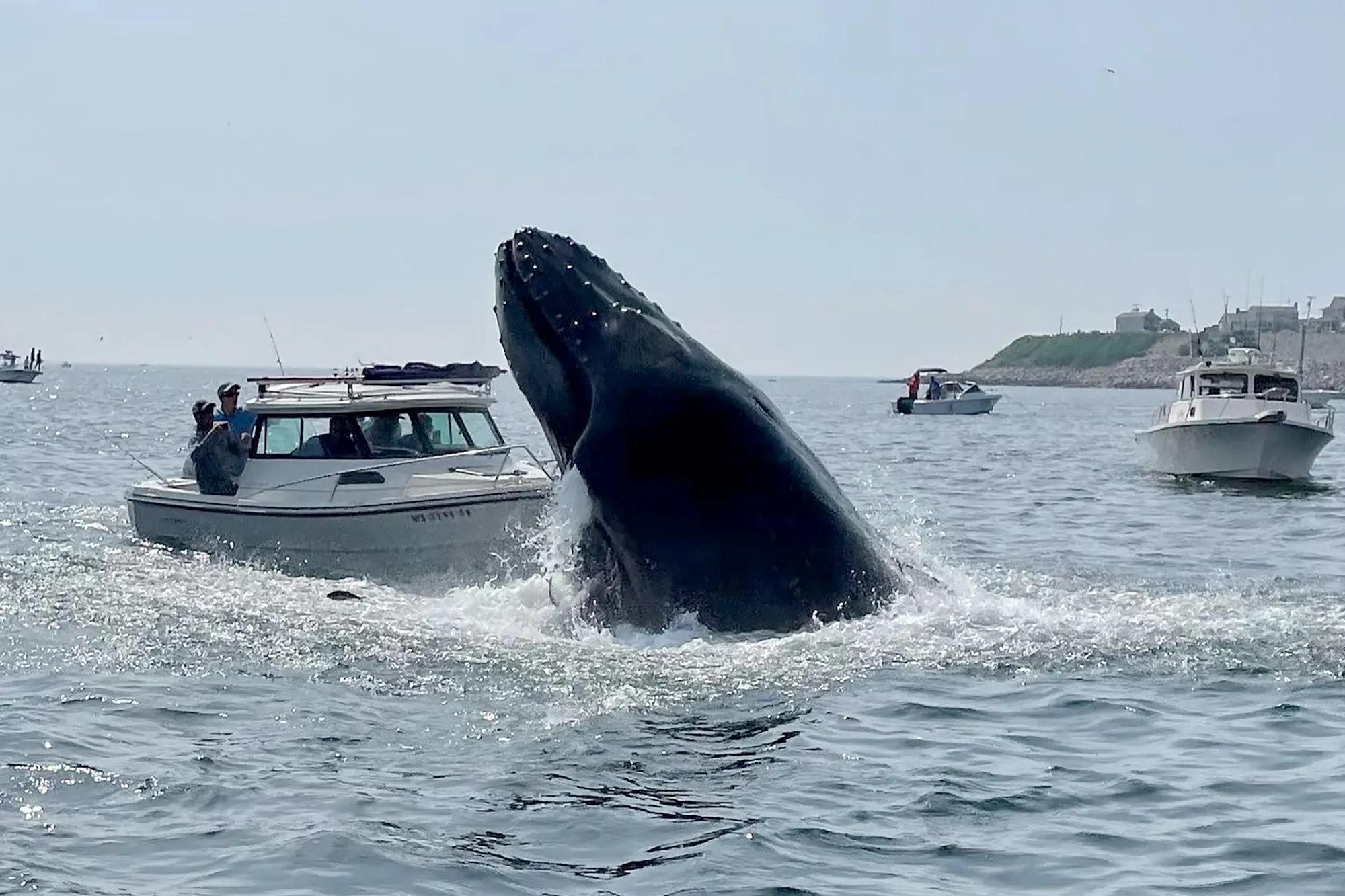
Stellwagen Bank, a 19-mile-long underwater plateau 25 miles east of Boston, ranks among the most productive marine habitats in the North Atlantic. Its nutrient-rich waters support dense concentrations of sand lance, the finger-length fish that draw humpback whales back each spring after their winter breeding grounds in the Caribbean. The migration is not a single event but a months-long procession: mothers with calves arrive first in April, followed by juveniles, then adult males and females through May. The boston whale watching season guide reveals a shifting cast. May and June feature nursing pairs and curious juveniles, often approaching boats closely. July and August bring the highest whale counts—some trips log 15 to 20 individuals—as competition for schooling fish drives surface lunge-feeding, bubble-net displays, and breaching. Finback whales, the ocean's second-largest species, patrol the deeper channels. Minke whales work the shallows. By September, humpbacks begin fattening for the southward journey, and sightings taper through October as water temperatures drop below 55°F. Morning departures from Long Wharf between 8:00 AM and 10:00 AM offer two advantages: calmer seas before afternoon winds build, and optimal light angles for photography. The 3.5-hour round trip includes 60 to 90 minutes on Stellwagen Bank itself, where naturalists identify individuals by fluke patterns cataloged since the 1970s. Some whales—Salt, Rapier, Ganesh—have been photographed across four decades. Weather cancellations occur, particularly in April and late October when nor'easters sweep through. Vessels operate daily throughout the season, but sightings are never guaranteed; success rates hover near 95 percent May through September, lower at the season's edges. Water temperature drives everything. A cold spring delays the sand lance spawn and pushes whale arrival into May. An unusually warm autumn extends feeding into November. Checking recent trip reports before booking reveals whether whales are still present or have already begun their migration. The season's reliability is not a schedule but a biological negotiation between predator and prey, played out in one of the planet's richest feeding grounds.
“Stellwagen Bank's nutrient upwelling supports the density of sand lance that brings humpbacks back to the same 19-mile stretch year after year.”
Understanding the Boston Whale Watching Season
The Boston whale watching season typically runs from April through October, when humpback, finback, and minke whales migrate to the Stellwagen Bank National Marine Sanctuary to feed. Visiting during the peak summer months offers the highest probability of sightings, while morning departures are generally preferred for calmer sea conditions.
April – May
Moderate crowdsCool, 50-65°F
Early season sightings often include returning mothers and calves.
June – August
High crowdsWarm, 70-85°F
Peak season with active feeding behaviors in the sanctuary.
September – October
Moderate to low crowdsCool, 60-75°F
Consistent sightings continue before whales migrate south for winter.
Weekday mornings
Lowest density—
Morning departures often feature calmer sea conditions and optimal light for whale sightings.
Verdict: The best time for whale watching is from June through August on a weekday morning to take advantage of calmer seas and optimal lighting.
Daily Operational Hours for Boston Whale Watching
The operational hours for Boston whale watching departures remain consistent throughout the week to accommodate visitors. Staff are available daily to assist with departures and inquiries.
| Monday | 08:00–18:00 | |
|---|---|---|
| Tuesday | 08:00–18:00 | |
| Wednesday | 08:00–18:00 | |
| Thursday | 08:00–18:00 | |
| Friday | 08:00–18:00 | |
| Saturday | 08:00–18:00 | |
| Sunday | 08:00–18:00 |
Getting to Your Boston Whale Watching Season Departure
Whale watching departures are located at 1 Long Wharf, Boston, MA 02110, USA. The site is accessible via public transit and personal vehicles, situated directly on the waterfront in the downtown area.
Blue Line to Aquarium Station
I-93 or I-90 to Atlantic Avenue
Walking access from Faneuil Hall
Pre-Departure Checklist for the Boston Whale Watching Season
Complete these steps before heading to Long Wharf to ensure a smooth departure.
-
Book your cruise in advance — Departures fill quickly during peak whale watching season, especially weekends and summer months.
-
Bring a government-issued photo ID — Required for check-in at the departure terminal.
-
Pack layers and a waterproof jacket — Ocean temperatures drop significantly offshore, even on warm days, and sea spray is common.
-
Wear non-slip, closed-toe shoes — Deck surfaces become slippery from spray and movement.
-
Apply motion sickness prevention if needed — Take medication 30–60 minutes before departure for best effectiveness.
-
Arrive 30 minutes before departure time — Allows time for check-in, boarding, and securing a preferred viewing spot on deck.
Check availability
Frequently Asked Questions About Boston Whale Watching Season
Everything you need to know about boston whale watching season